






By Yvonne Wright • The Current Contributing Writer
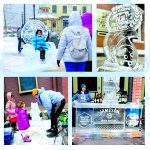
As the winter’s cold firmly establishes its grip on nature, silencing the birds and slowing the rivers’ flow… the snowy covering of the ground softens the imposing message of life’s seasonal pause with its undeniably picturesque beauty. We cocoon, stay indoors and appreciate the inviting glow of the local pub. And yet, out of the winter’s stillness and in defiance of the bitter cold rises a unique creative practice inherent to the season, but brief in its physicality — the art of ice sculpting.
To create artworks in ice requires the use of a natural material abundant in winter – the ice blocks – often ‘quarried’ from the frozen lakes, ponds and rivers cut to size. Single, stacked or ‘welded’ in dramatic configurations, such sculptures often appear ‘clouded’ or ‘milky’ in their appearance, because naturally occurring ice contains fine air molecules mixed with impurities trapped inside water during the binding process. Naturally opaque ice may be made clearer after carving by carefully applying heat (e.g., using a propane gas torch) to its outer layers, melting them a bit. Also, distilled water can be used sometimes for enhancing ice clarity, and experienced sculptors always know how to use carefully selected blocks suitable for their art.
However, to remedy the problem and to meet a growing demand for ice, mechanically produced blocks are clearer, and sparkle under the light like crystals, because the process of freezing water is carefully controlled in specifically designed freezing-chambers. This ice-on-demand technology is capable of producing highly sought after material on an industrial scale, sometimes combining clear ice with dye-colored gels for added aesthetics in multifaceted designs.
As an art form, these ephemeral creations are temperature sensitive and can easily melt away if the carver doesn’t keep his/her workshop cold. They can crack if not protected in transport, or, temperate weather conditions may compromise outdoor displays. Considering such difficulties, and if the designs are simple, some ice-carving professionals are capable of completing their work in just under ten minutes.
In art competitions held outdoors, the artists arm themselves with chainsaws, hand saws and razor-sharp chisels specifically designed for handling ice. While, many larger scale designs are created by machines, sophisticated computerized systems that are also used by stone and marble sculptors.
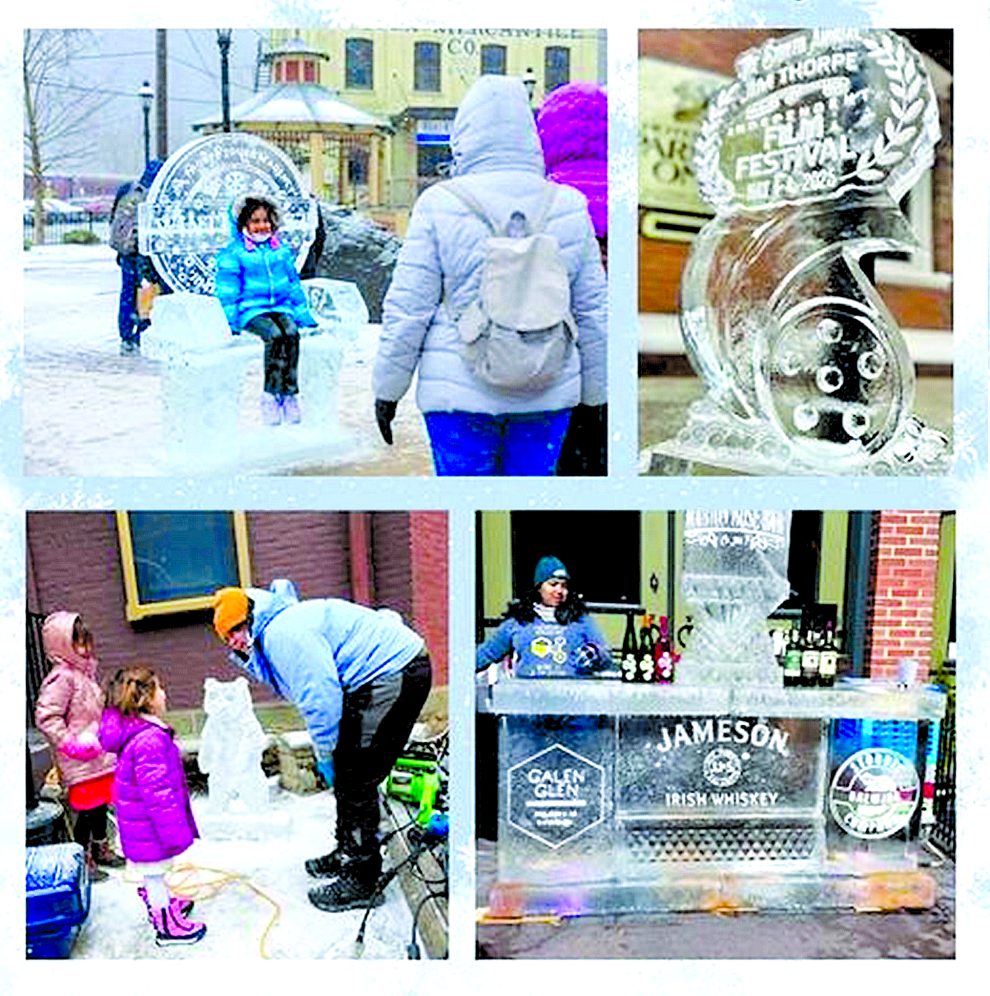
The most widespread use of ice sculptures today is in the production of company logos, in enhancing food presentation at parties and wedding receptions, or at cruise-ship buffets famous for their use of ice swans, doves, hearts and various animals. Ice sculptures may also be used as bar ice luges, made from a large block with a narrowly carved channel to pour liquids through, or, the entire bar can be made of ice.
Interestingly and almost counter intuitively, the art of carving ice is traditionally taught in culinary schools using text books like: Ice Carving Made Easy by Joseph Amendola, or Ice Sculpture: The Art of Ice Carving in 12 Systematic Steps by Mac Winker, to name a few. There is also the National Ice Carving Association (NICA) based in Oak Brook, Illinois, which supports ice carvers of all ages and promotes this unique art on a national scale and abroad. Since 1989, it has sanctioned and supported various ice sculpture competitions around the United States and yearly national championships.
Traditionally, international ice championships are held in Alaska, where in 2025 nearly 100 sculptors come from around the world “to sculpt large blocks of pristine natural ice sometimes referred to as Arctic Diamonds.” The various categories of The 2026 World Ice Art Championships start February 16 through March 13 (https://icealaska.com/) and typically include: Multi Block Competition, Double Block Competition, Single Block Competition, Fairbanks Open, and Youth Classic – all encompassing abstract and realistic art. The event is run almost exclusively by volunteers, and “in a typical year, more than 45,000 spectators pass through the gates of the Ice Park at the Tanana Valley State Fairgrounds,” in Fairbanks, AK.
We can proudly state that Jim Thorpe, is also holding its annual display of ice sculptures, presented the weekend of February 14th-15th, 2026 during the WinterFest event, and sponsored by the Jim Thorpe Tourist Agency (JTTA). Fingers crossed, that weather cooperates this year to keep the town firmly in its cold grip that weekend.
The annual winter celebration will include live ice carvings, live entertainment, carriage rides, food and drink specials at local restaurants, and more. So don’t miss this family friendly annual WinterFest held in Jim Thorpe’s historic downtown. No ticket purchase is necessary for general admission, but plan ahead wisely for parking and transportation. Some individual attractions will require purchasing of tickets like: the Mug Walk ($30/ticket) and Train Tours ($23-$32/ticket). And of course, there will be plenty of shopping in the warmth of our downtown shops and art galleries.
If you’ve really got the bug for ice sculpture aesthetics, February in Pennsylvania has a lot more to offer locally. Just get yourself warmly bundled up and enjoy: the “Heart of Lewisburg Ice Festival” hosted February 6th-7th, the “Franklin on Ice Festival” held February 7th, the “Carlisle’s 10th Ice Art Fest” hosted February 6th-8th, the “Fire & Ice Festival” in Lititz held February 13th-22nd, the “Carved in Ice” in Butler on February 20th-21st, “The Erie Winter Carnival” hosted February 27th-March 1st, and the “Ice & Fire Festival” in Harrisburg held March 7th… Because winter is anything but dreary.













Add Comment